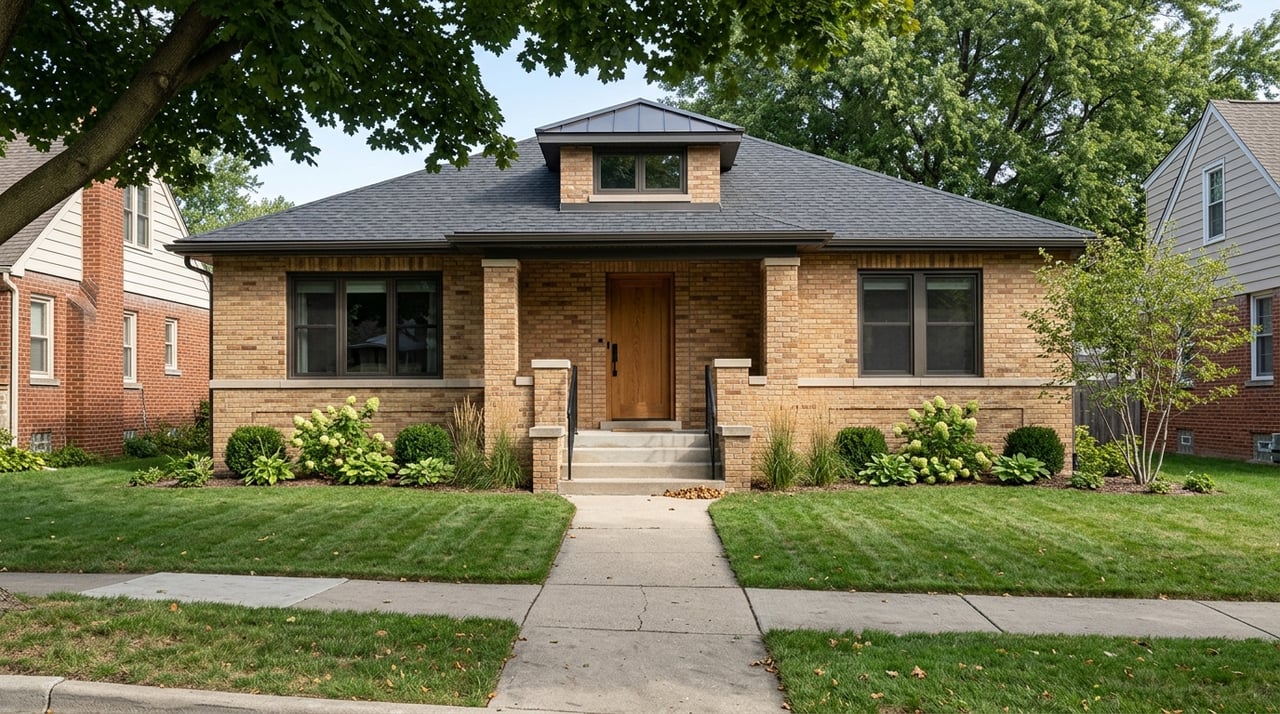
Trying to choose between Old Irving Park and The Villa? If you are drawn to historic homes in Irving Park, the real question is not which area is better. It is which one fits the way you want to live, shop, commute, and invest. This guide breaks down the key differences in layout, architecture, transit, and pricing so you can narrow your search with more confidence. Let’s dive in.
Old Irving Park vs The Villa
Both areas sit within Irving Park, but they offer different experiences. Old Irving Park is the larger historic core, with roots as an 1870s suburb that was annexed by Chicago in 1889. The Old Irving Park Association defines its borders as Montrose to the north, Addison to the south, Pulaski to the east, and the Milwaukee Road Railway to the west.
The Villa is a smaller landmark district within Irving Park. It was developed mainly from 1907 through 1925 and is known for landscaped parkways and a more compact, intentional street pattern. It is also both a Chicago Landmark District and a National Historic District.
If you want a simple way to frame the decision, think of it like this: Old Irving Park offers more variety and flexibility, while The Villa offers a more cohesive historic setting.
Street pattern and neighborhood feel
Old Irving Park feels broader
Old Irving Park is a broad historic neighborhood rather than a tightly defined pocket. Its identity comes from a long preservation story and a housing stock that includes many older homes across a wider area.
For many buyers, that creates a suburban-in-the-city feel. Blocks can vary more from one section to the next, and the streetscape is less uniform than what you will find in The Villa.
The Villa feels more curated
The Villa is centered on the 3600 to 3800 blocks of Avers, Hamlin, Harding, and Springfield. Its parkways, boulevard-like layout, and concentrated historic character give it a more deliberate visual identity.
If you want a neighborhood where the streetscape feels especially consistent from block to block, The Villa stands out. That smaller footprint can make the area feel more distinct and more curated.
Architecture and lot patterns
Old Irving Park offers more variety
Old Irving Park has the broader architectural mix. According to the Old Irving Park Association, the area includes Queen Anne, Victorian, American Foursquare, Italianate, and bungalow homes, with some houses dating back to the 1860s.
That variety also shows up in lot sizes. Recent examples in the area include lots around 4,968 square feet and 7,187 square feet, along with a pending listing marketed as a rare 50-by-156 oversized parcel. In practical terms, that means your search may turn up everything from classic homes on standard city lots to houses on unusually large parcels for Chicago.
The Villa leans more cohesive
The Villa is known for Prairie and Craftsman influence, along with Chicago and California bungalows, American Foursquares, and some colonial or Tudor details. Historic planning in the district favored 50-foot frontage, which helped shape a more controlled and cohesive look.
Recent listing examples still show generous lots by city standards, including about 4,536 square feet, 75-by-125 parcels, and even a 99-by-113 corner lot. Still, compared with Old Irving Park, the overall lot pattern tends to feel more intentional and more visually consistent.
Transit and day-to-day convenience
Old Irving Park has more transit options
Old Irving Park has the broader transit toolkit. The Irving Park Blue Line station at 4131 W. Irving Park Road connects to CTA bus routes 53, 54A, 80, and X98, along with nearby access to Metra UP-NW service. The Irving Park Brown Line station is also nearby, and the 80 Irving Park bus runs late with accessible service.
That range matters if you want more than one commuting option. It can also help if your daily routine includes different parts of the city or a mix of rail and bus trips.
The Villa scores well for walkability
The Villa’s key transit anchor is the Addison Blue Line station at 3622 W. Addison Street, which is accessible and connects to CTA Bus 152. Redfin’s neighborhood snapshot gives The Villa an 82 Walk Score, 72 Transit Score, and 61 Bike Score.
Old Irving Park’s snapshot comes in at 77 Walk Score, 69 Transit Score, and 67 Bike Score. Based on those scores and station access, The Villa appears a little stronger for walk and transit convenience, while Old Irving Park offers more overall rail and bus options.
Pricing and market activity
Old Irving Park shows more sales volume
In February 2026, Redfin reported an Old Irving Park median sale price of $480,000, down 6.8% year over year, with a median of $272 per square foot, 18 homes sold, and a median 66 days on market. Redfin also described the neighborhood as somewhat competitive, with homes often selling around list price and some moving faster.
That higher number of sales gives buyers and sellers more comp visibility. If you like seeing a broader sample before making a pricing decision, Old Irving Park may feel easier to evaluate.
The Villa can be harder to read
The Villa’s February 2026 snapshot was much thinner. Redfin reported a median sale price of $340,000, a median of $340 per square foot, and only 1 home sold.
That small sample size is important. When only one property closes in a month, the headline number can swing sharply and may say more about that individual sale than the district as a whole.
What the numbers suggest
The contrast between median sale price and price per square foot tells an interesting story. The Villa posted a lower absolute median sale price, but a higher median price per square foot than Old Irving Park.
That can suggest buyers are paying more on a square-foot basis for a smaller, more curated historic inventory. Old Irving Park, by comparison, appears to offer more range across property types, sizes, and price points.
Recent sale examples show the spread
In Old Irving Park, recent sales show how wide the range can be. A 3-bedroom, 3.5-bath home on Kolmar sold for $670,000 in 33 days and 7% over list, while a 5-bedroom home on Waveland sold for $622,500 and 4% under list after 72 days. Another sale on Tripp closed at $1.15 million, showing that the neighborhood reaches into higher price tiers as well.
The Villa also has meaningful variation by property type. A 2-bedroom unit on Waveland sold for $340,000 in 26 days and 5% over list, while a 4-bedroom home on Hamlin sold for $975,000 after 119 days and 5% under list.
For you as a buyer, that means The Villa may require especially careful property-by-property analysis. For sellers, it means pricing strategy can matter even more when inventory is limited and comp sets are less uniform.
Which niche fits your priorities?
Choose Old Irving Park if you want flexibility
Old Irving Park may be the better fit if you are looking for:
- More architectural variety
- More chances to find a larger or unusual lot
- More transaction volume and clearer comparable sales
- A wider range of property types and price points
The tradeoff is that the neighborhood feel is less tightly uniform. If you love visual consistency from block to block, Old Irving Park may feel broader and less curated than The Villa.
Choose The Villa if you want cohesion
The Villa may be the better fit if you are looking for:
- A compact landmark district
- A more consistent historic streetscape
- Slightly stronger walk and transit scores
- A more protected and intentional visual character
The tradeoff is that inventory can be thinner. With fewer listings and fewer recent sales, pricing can be more variable from one home to the next.
The best question to ask
If you are deciding between these two pockets, start with one question: Do you want more house and lot flexibility, or a more uniform historic setting? That is the clearest dividing line between Old Irving Park and The Villa based on the current data.
A focused search saves time and helps you compare the right homes, instead of getting pulled in two different directions. When you know whether you value flexibility or cohesion more, the choice usually becomes much clearer.
If you want help comparing homes, lot patterns, and pricing strategy in Irving Park, Jason O'Beirne can help you evaluate the details and narrow in on the right fit for your goals.
FAQs
What is the main difference between Old Irving Park and The Villa?
- Old Irving Park is a broader historic neighborhood with more architectural and lot-size variety, while The Villa is a smaller landmark district with a more cohesive streetscape and more controlled historic character.
Is The Villa more walkable than Old Irving Park?
- Based on the current Redfin snapshot in the research, The Villa has a slightly higher Walk Score and Transit Score, while Old Irving Park has a slightly higher Bike Score and more overall rail and bus options.
Does Old Irving Park have larger lots than The Villa?
- Old Irving Park appears to offer more variability and some unusually large parcels, while The Villa generally reflects a more controlled lot pattern shaped by historic planning rules.
Is pricing in The Villa more volatile than Old Irving Park?
- Yes, the current data suggests The Villa can be more volatile because it had only one reported sale in the February 2026 snapshot, which makes monthly pricing less stable and harder to generalize.
Which area is better for buyers who want more home options in Irving Park?
- Old Irving Park may offer more options because it is a broader area with more transaction volume, a wider mix of housing styles, and clearer comparable sales data.