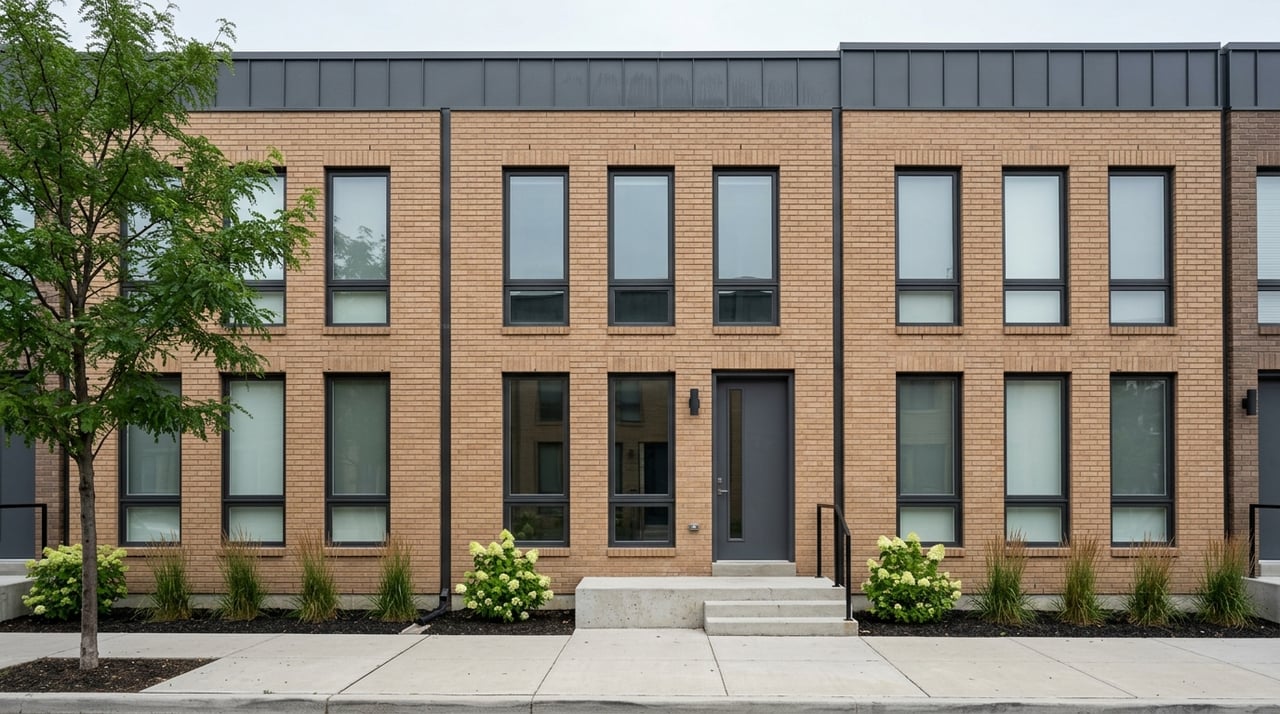
If you are planning an infill project in West Town, the margin for error is smaller than it looks. Buyers move quickly here, but they also notice when the product, pricing, or presentation misses the neighborhood. This guide breaks down how to think about product type, site checks, pricing, and absorption so you can make sharper decisions before you pour the first foundation. Let’s dive in.
Why West Town Works for Infill
West Town has the kind of profile that keeps small builders interested. The community area had a 2023 population of 86,598 and 42,249 households, with a median age of 33.0. It is heavily made up of working-age residents, including 44.9% ages 20 to 34 and 24.5% ages 35 to 49.
That matters because your likely buyer is not looking for a suburban-style product dropped into the city. The data points to smaller households with meaningful purchasing power. West Town has high educational attainment, a median household income of $134,322, and 45.4% of households earning $150,000 or more.
Household size also tells an important story. About 34.4% of households are one-person households, and 42.6% are two-person households. For a builder, that usually supports efficient 2-bedroom and 3-bedroom plans over oversized layouts with too much low-value square footage.
Match the Product to the Neighborhood
West Town is an infill neighborhood by nature, not by marketing language alone. Only 10.4% of housing units are detached single-family homes. A much larger share sits in 2-unit, 3-flat, 4-flat, and small multifamily buildings, which makes context-sensitive product a better fit than a prototype that could belong anywhere.
The housing stock is also relatively old. About 42.2% of units were built before 1940, while only 11.8% were built in 2010 or later. That creates room for new product, but it also raises the bar on design fit, massing, and street presence.
For many small builders, the best-fit product types in West Town include:
- Townhomes
- Two-flats
- Three-flats
- Compact condo buildings
- Fee-simple homes that fit the existing urban fabric
The unit-size data supports this direction. About 45.7% of housing units are 2-bedroom, and 25.3% are 3-bedroom. By contrast, only 6.3% are 4-bedroom and 2.9% are 5-bedroom or larger.
Build for How People Actually Live
The easiest mistake in West Town is confusing luxury with sheer size. Buyers here often respond better to thoughtful planning than to inflated square footage. If your floor plan wastes width, has weak storage, or treats the second bedroom like an afterthought, the market is likely to notice.
A stronger program usually includes a real second bedroom, a usable third bedroom where applicable, and flexible work-from-home space. That last point matters because 31.0% of residents work from home. Even a well-placed office nook or flex room can improve how a plan lives day to day.
When you are shaping the program, keep these buyer-facing priorities in view:
- Livable 2-bedroom and 3-bedroom layouts
- Office or flex space for remote or hybrid work
- Usable storage instead of leftover dead space
- Integrated outdoor space that feels intentional
- Parking solutions that support the site without overwhelming it
In West Town, polished planning often beats unnecessary bulk. Buyers are often comparing your project against older condos, two-flats, and resale homes, so your edge comes from better function, better light, and a more coherent finish package.
Start With Parcel-Level Due Diligence
In Chicago, broad neighborhood assumptions can get expensive fast. The city’s zoning map guidance is clear that zoning should be checked by specific parcel, PIN, intersection, or geography. In practical terms, that means your first pass should be site-specific before you lock in a prototype.
For a West Town infill project, confirm the parcel’s base zoning district and then test for anything else that could affect the plan. That includes overlays, transit-served status, and whether the property sits in a landmark-protected area. A concept that works on one block may not work the same way a few streets over.
Your early entitlement checklist should include:
- Base zoning district
- Any overlay conditions
- Transit-served location status
- Landmark district or designated-property review issues
- Whether the project could trigger Affordable Requirements Ordinance review
This is where disciplined predevelopment work protects your schedule. It is much easier to revise a concept on paper than after design fees and carry costs start piling up.
Watch for Landmark and Design Review Issues
Parts of West Town include historically significant fabric that can shape the review process. The Milwaukee Avenue District, for example, is within the West Town community area and is recognized as one of Chicago’s most intact commercial streets from the late nineteenth and early twentieth centuries. If your site falls within designated protections, permit applications may be reviewed for impacts on significant historical and architectural features.
That does not automatically stop development. It does mean that context matters. Builders who treat West Town like a blank slate can run into friction if the design ignores the block’s scale, rhythm, or architectural character.
The practical takeaway is simple: use context-sensitive design language early. You do not need to copy old construction, but your project should look like it belongs in West Town.
Test Parking Before You Overbuild It
Parking in West Town should be treated as a design and pricing lever, not a default assumption. The household transportation mix is more balanced than many builders expect. About 20.2% of households have no vehicle, 56.0% have one vehicle, 20.6% of workers commute by transit, and 8.3% walk or bike.
That mix creates room for smarter site planning. In qualifying transit-served locations, Chicago planning documents note that parking requirements can be reduced by up to 50%. For small sites, that can materially affect unit count, layout efficiency, and what you can do with the ground level.
This does not mean parking is irrelevant. It means parking should be calibrated to the site and the buyer profile. In many West Town projects, buyers still value parking, but they also care about outdoor space, storage, and cleaner floor plans.
Price Within the Market Band
West Town supports premium pricing, but it is not a market where you can ignore the data. Current consumer-facing sources place the neighborhood in a mid-six-figure band, though each source uses a different methodology. Zillow shows a home value index of $588,287, Realtor.com reports a median listing price of $674,900 and median sold price of $602,500, and Redfin shows a median listing price of $699,000.
The spread is best understood as a difference in methodology, not a contradiction. What matters for a builder is the broader signal. West Town has enough demand to support well-executed product, but weak pricing discipline tends to show up quickly.
That is especially important because the market is moving, but not blindly. Zillow says homes go pending in about 10 days, while Realtor.com and Redfin show median days on market of roughly 26 to 29 days. Redfin also reports about 3 offers per home on average.
Plan for Fast, Price-Sensitive Absorption
The absorption story in West Town is healthy, but it is not forgiving. Buyers are active, and polished listings can move quickly. At the same time, if the finish package feels inconsistent, the pricing gets ahead of the product, or the marketing is incomplete at launch, the market can push back just as fast.
That is why launch discipline matters. You want the pricing, floor plans, visuals, and finish story ready before the first public showing. In a neighborhood where buyers compare details closely, incomplete positioning can cost momentum that is hard to win back.
A stronger go-to-market process usually includes:
- Final pricing set before launch
- Clear floor plans that explain the layout fast
- Professional photography and video ready on day one
- Finish-package visuals that support the price point
- A consistent story around light, layout, storage, and outdoor space
This is where presentation becomes a real business decision, not just a branding exercise. In West Town, polished marketing helps buyers understand the value quickly.
Focus Your Messaging on Livability
West Town buyers are often not chasing the biggest unit on paper. They are comparing how a home functions in daily life. That makes your messaging just as important as your plan.
The strongest builder story usually centers on efficiency, natural light, outdoor space, and finish coherence. That lines up with the neighborhood profile, which includes many working-age residents, many smaller households, and a strong work-from-home share. It also aligns with a walkable urban setting where design quality can carry more weight than raw square footage.
When you market a West Town infill project, lead with:
- Layout efficiency
- Real bedroom count and flexibility
- Storage that feels useful
- Outdoor space that is easy to understand
- Parking that is integrated, not awkward
- Design that fits the block and product type
That approach tends to feel more credible than generic luxury language. It also gives buyers practical reasons to act.
A Simple West Town Playbook
If you want a clean framework, keep it simple. Start with the site, design for the actual household profile, and launch with discipline. West Town rewards builders who understand that infill success comes from fit, not just from newness.
A practical playbook looks like this:
- Confirm parcel realities first. Check zoning, overlays, transit-served status, landmark issues, and possible ARO implications.
- Choose the right product type. Townhomes, two-flats, three-flats, and compact condo product often align better with the neighborhood than oversized formats.
- Prioritize 2-bedroom and 3-bedroom livability. Build plans around real daily use, not wasted square footage.
- Use parking strategically. Test what the site and location actually support before sacrificing better uses of space.
- Price to the market band. Premium is supported, but overreach can show up quickly in days on market.
- Launch with polished marketing. Strong visuals, floor plans, and finish-package storytelling help buyers understand value faster.
For small builders, that discipline can be the difference between a smooth sellout and a slow reset.
If you are evaluating a West Town site or preparing a new-construction launch, working with a team that understands product positioning, pricing, and neighborhood-level absorption can save time and protect margin. To talk through your project strategy, schedule a consultation with Jason O'Beirne.
FAQs
What type of infill product fits West Town best?
- In many cases, townhomes, two-flats, three-flats, compact condo buildings, and other context-sensitive urban product types fit West Town better than oversized suburban-style layouts.
What bedroom mix makes sense for West Town buyers?
- The neighborhood data suggests that 2-bedroom and 3-bedroom plans are the strongest fit, especially when they include flexible work-from-home space and practical storage.
How important is parking in a West Town infill project?
- Parking still matters, but it should be tested against the site, buyer profile, and transit-served status because qualifying locations may allow reduced parking requirements.
Why does zoning need a parcel-specific review in West Town?
- Chicago zoning guidance is parcel-specific, so builders should confirm the exact site’s district, overlays, and any special conditions before committing to a design concept.
Can landmark status affect a West Town development plan?
- Yes. If a site is in a landmark-protected area or involves a designated property, permit review may consider impacts on significant historical and architectural features.
How fast do homes sell in West Town?
- Current market sources show active demand, with homes going pending in about 10 days on one platform and median days on market around 26 to 29 days on others, which points to healthy but price-sensitive absorption.
What helps a West Town project sell faster?
- Clear pricing, strong floor plans, professional visuals, and a cohesive finish-package story help buyers understand the value quickly and support a stronger launch.