Looking at a gut-rehab single-family home in Humboldt Park can feel exciting and risky at the same time. Fresh finishes, bright kitchens, and staged rooms can make a house look move-in ready, but in a neighborhood with many older homes, new surfaces do not always mean every major system was rebuilt. If you want to buy with confidence, you need a methodical way to separate quality work from cosmetic work. Let’s dive in.
Why Humboldt Park Requires Extra Care
Humboldt Park is centered on the 207-acre park and includes housing stock that often dates back to the early 1900s. Historical summaries note that two-flats, brick bungalows, and one- and two-story frame dwellings became common between 1900 and 1920.
That matters because many gut-rehabbed homes in the area start with an older structure. You may be looking at a home with beautiful new cabinets, tile, and lighting, while parts of the shell, drainage, or mechanical systems may still need close review.
Start With the Paper Trail
Before you get attached to the finishes, ask for the documents that help explain what was actually done. In Illinois, sellers of residential real property must provide the disclosure report before the contract is signed, and they must supplement it before closing if they discover a new material defect.
That makes the disclosure report more than a formality. It is one of your first tools for checking whether the renovation story matches the facts.
What to compare right away
As you review a listing, compare these items side by side:
- Seller disclosure report
- Listing photos
- Permit numbers or permit history
- Contractor invoices, if available
- Any closeout or inspection records the seller can share
If the home looks brand new in every photo but the paperwork only shows limited work, that mismatch deserves attention. A new kitchen or bath should not be treated as proof that the whole house was updated.
How to use Chicago permit research
Chicago’s permit portal can help you screen a property by address. The city notes that limited information is available by address, and more detail may be available when you have the permit application number.
Just keep your expectations realistic. The city also states that its building-records database is informational only and does not guarantee accuracy or completeness, so permit research is helpful, but it is not a substitute for inspection.
Look for Mismatches in Photos and Disclosures
One of the fastest ways to spot risk is to look for gaps between the home’s presentation and the written disclosures. A polished listing can make a partial rehab feel like a full rebuild.
Pay special attention when disclosures mention roof work, plumbing or electrical upgrades, basement seepage, or prior water intrusion. If those notes feel vague, incomplete, or inconsistent with the photos, ask follow-up questions before you move forward.
Photo clues that deserve a closer look
When you scroll through listing photos, check for:
- Awkward room connections or narrow hallways
- Inconsistent trim joints or paint edges
- Rushed-looking tile lines or cabinet reveals
- Stair details that look uneven or patched
- A fully “new” look that is not supported by the document trail
These clues do not automatically mean the rehab is poor. They do suggest you should slow down and verify the scope of work more carefully.
Evaluate the House in the Right Order
When you tour a gut rehab, do not start with the finishes. Illinois home inspection standards point buyers toward a smarter order of operations: review the shell and water management first, then utility systems, then cosmetics.
That approach helps you focus on the items that are most expensive to fix and most important to long-term performance.
1. Check the exterior and water management
Start outside. Look at the rooflines, flashing, gutters, and downspouts to see whether water appears to be directed away from the house.
Also study grading near the foundation. If the ground does not slope away where possible, water can become an ongoing basement issue, especially in a finished lower level where recent patching may be hidden behind drywall.
2. Check structure-related elements
Look closely at masonry, tuckpointing, porches, stairs, and railings. Fresh paint can improve appearance, but it should not be confused with structural soundness.
If you notice cracking, movement, soft spots, or uneven surfaces, that is a strong sign to bring in the right professional for a deeper review.
3. Check the major systems
Inside the house, focus on visible and documented system work.
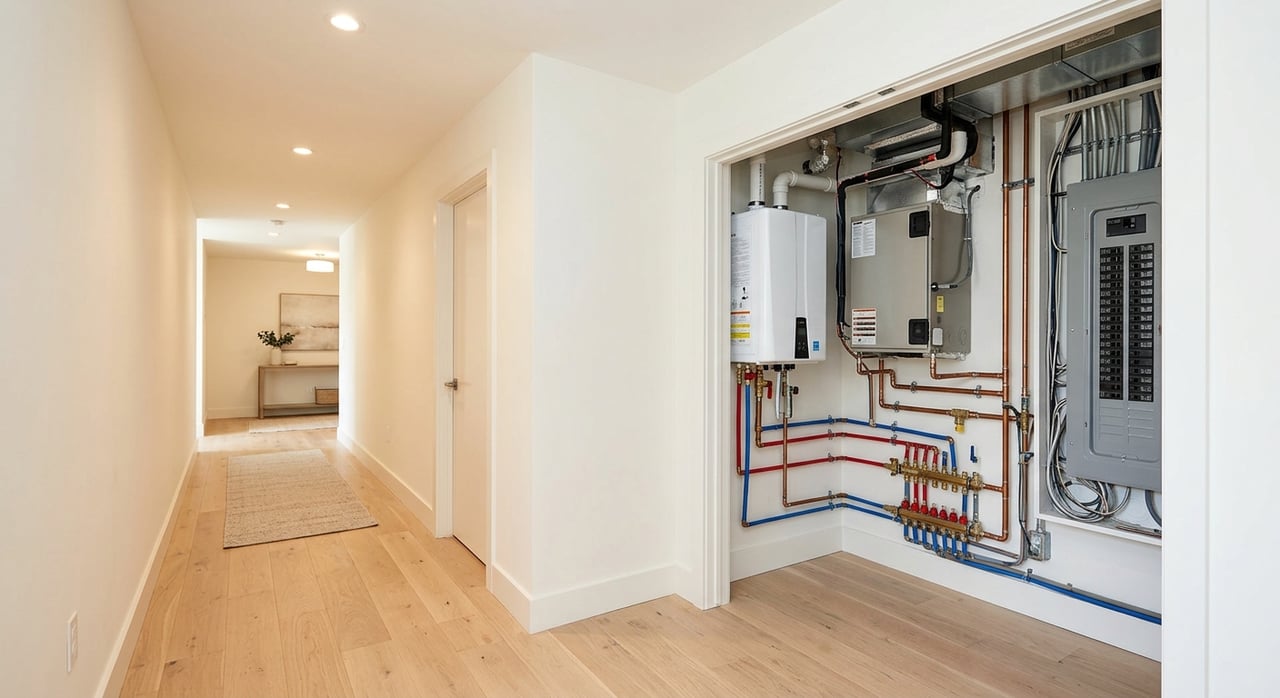
For electrical, note the panel location, service size, any visible subpanels, and whether wiring runs appear clean rather than rushed. For plumbing, look for visible supply lines, the age of the water heater, shutoff locations, and any signs of active or prior leaks.
For HVAC, check whether equipment looks integrated into the home rather than improvised. Pay attention to venting, returns, and whether the installation appears consistent with the overall renovation quality.
4. Check the basement carefully
In a Humboldt Park gut rehab, the basement can tell you a lot. Watch for moisture stains, efflorescence, odor, sump pump presence, and signs that walls or flooring may be hiding recent repairs.
If the lower level is finished, ask what was done to manage water before the finishes were installed. That question matters more than how attractive the space looks today.
5. Check the layout and livability
Only after reviewing the shell and systems should you judge the design. A good gut rehab should not just look modern. It should also function well in daily life.
Ask yourself whether the floor plan supports natural movement between the entry, kitchen, living space, bedrooms, and bathrooms. A central kitchen, sensible bedroom placement, and durable finishes usually matter more than trendy styling.
Watch for Safety and Air-Quality Items
Two small items deserve special attention during a showing because they are easy to overlook.
First, verify carbon monoxide alarm placement. The Illinois State Fire Marshal says carbon monoxide detectors are required within 15 feet of rooms used for sleeping in homes with fossil-fuel appliances or an attached garage.
Second, think seriously about radon if the house has a basement or finished lower level. Illinois says the only way to know a home’s radon level is to test, recommends keeping levels below 4.0 pCi/L, and cites a study in which 41% of Illinois homes tested were above that level.
Know What You Can Check Yourself
You can do a lot during a showing if you stay focused. Buyers should absolutely review disclosures, compare finishes room to room, inspect visible drainage patterns, and ask direct questions about what was replaced versus what was left in place.
You can also pay attention to signs of rushed work, poor flow, patched surfaces, water staining, and mechanicals that do not look fully integrated. Those observations can help you decide whether to proceed and what specialists to bring in.
Know When to Bring in Professionals
A licensed general home inspector should be your baseline on a recently renovated Chicago home. Illinois ties home inspection standards to visible and accessible conditions, which means a general inspection is important, but it is still only one layer of due diligence.
If you see structural cracking or movement, suspect roof or porch issues, have concerns about basement water, or notice a mismatch among photos, disclosures, and permits, specialist inspections become especially important. In other words, the more polished the cosmetic presentation, the more disciplined your review should be.
What Is a Negotiation Issue vs. a Deal-Breaker?
Not every issue should kill a deal. Some items are normal repair or credit discussions, while others may point to deeper uncertainty about the house.
A negotiation issue may include incomplete finish work, minor adjustment items, or visible wear that is easy to quantify. A potential deal-breaker is different. Think repeated signs of water intrusion, unclear scope on major system replacement, meaningful structural concerns, or a document trail that does not support how the property is being presented.
When a gut rehab is priced like a turnkey home, you should expect evidence that the major work was actually done. If that evidence is thin, you may be paying for appearance rather than value.
A Smarter Way to Evaluate a Gut Rehab
The best way to evaluate a gut-rehab single-family home in Humboldt Park is to stay methodical. Start with the disclosure report and permit trail, compare the paperwork to the listing photos, tour the home with a shell-first mindset, and use inspections to verify what you cannot confidently confirm yourself.
That approach protects you from overpaying for surface-level upgrades and helps you focus on the homes that truly combine design, livability, and solid underlying work. If you want help evaluating a Humboldt Park rehab with a more disciplined, construction-aware lens, schedule a consultation with Jason O'Beirne.
FAQs
What should you check first in a gut-rehab home in Humboldt Park?
- Start with the shell and water management, including rooflines, flashing, gutters, downspouts, grading, and any signs of basement moisture, before you focus on finishes.
How can you verify renovation work on a Humboldt Park single-family home?
- Compare the seller disclosure report, listing photos, permit history, permit numbers, contractor invoices, and any available inspection or closeout records to see whether the claimed scope of work is supported.
Can you rely on Chicago permit records for a gut-rehab home?
- Permit records are useful for screening, but Chicago says its building-records database is informational only and does not guarantee accuracy or completeness, so you still need inspections.
What are common warning signs in a renovated Humboldt Park home?
- Watch for mismatches between photos and disclosures, awkward floor-plan flow, uneven finish work, signs of basement moisture, vague notes about repairs, and major systems that look partially updated.
When should you order additional inspections on a gut-rehab property?
- Bring in specialists when you see structural cracking or movement, suspect roof or porch problems, notice basement water issues, or find inconsistencies among the photos, disclosures, and permit trail.
Should you test radon in a Humboldt Park home with a basement?
- Yes. Illinois says the only way to know a home’s radon level is to test, and this is especially important in homes with basements or finished lower levels.