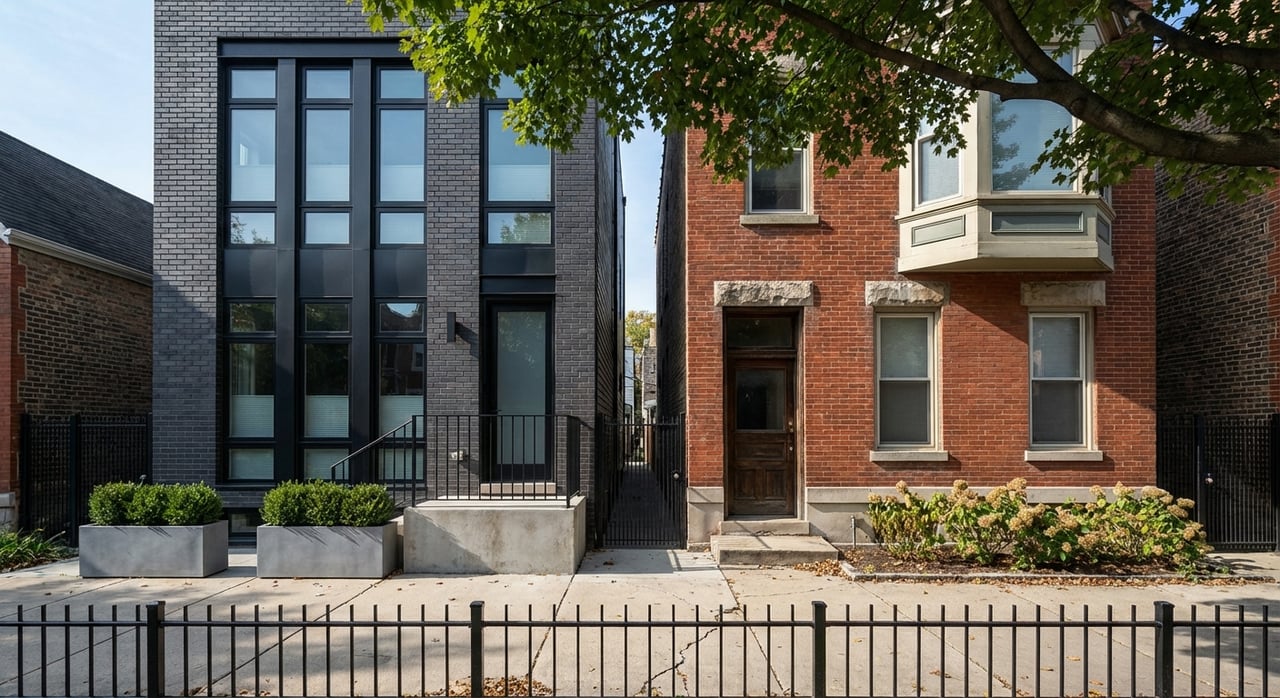
Torn between a sleek new build and the charm of a vintage loft in Bucktown? It is a great problem to have, and the right answer depends on how you live, what you value, and how you want to manage costs over time. In this guide, you will see a clear, local comparison of features, maintenance, energy performance, fees, and real examples at different price points so you can choose with confidence. Let’s dive in.
Bucktown market at a glance
Bucktown is competitive. Recent snapshots show a median sale price around the mid-700s, with homes often selling near or slightly above list and spending roughly the mid-50s in days on market. Different data sources use different methods, so you will see variation. Indexed home values run lower than listing medians, and single-family homes often command a premium while condos and townhomes trend below the neighborhood median. The mix matters when you compare options side by side.
New construction: what you get
Layout and space
New construction in Bucktown is built for modern living. You will often find open main floors, large chef’s kitchens, multiple outdoor spaces like rear decks and rooftop terraces, and attached two-car garages. A recent single-family example on West Dickens Avenue, built in 2025 and listed near $2.15 million, highlighted multiple roof decks and generous indoor-outdoor flow that suits entertaining and flexible daily life.
Finishes and tech
Expect premium finish packages. Many new builds market Sub-Zero and Wolf appliances, wide-plank light wood floors, quartz or stone countertops, integrated audio and data wiring, and EV charging rough-ins or installed chargers. These details add everyday convenience and help resale value because buyers understand and seek them.
Warranties and near-term maintenance
Most new homes include a new-home warranty, commonly a 1-2-10 structure that covers workmanship for one year, distribution systems for two years, and qualifying structural defects for ten years. Review the actual policy language and provider. The framework outlined by the warranty administrator explains how these protections work and how they reduce short-term risk for owners. See the overview from a national new-home warranty provider.
Energy performance and comfort
New builds are generally constructed to current energy codes. Better insulation, high-performance windows, and efficient HVAC can lower utility costs and create a more comfortable home. Building envelope quality matters, especially windows, since older single-pane units can drive heat loss and higher energy use. For practical ways to reduce energy waste, review this concise guide on home energy savings.
Vintage and loft: what you get
Character and volume
Vintage rehabs and loft conversions deliver what many buyers love about Bucktown and nearby corridors: high ceilings, exposed brick or concrete, big industrial-style windows, and unique floor plans. A loft condo along North Milwaukee Avenue sold near $415,000 in 2024 with 12 to 13-foot ceilings and a wide-open living area. These spaces feel distinctive and often place you close to restaurants, shops, and transit.
Systems and age
Character comes with tradeoffs. Even well-executed rehabs can hide older or retrofitted systems, including electrical, plumbing, and roofing. Aging or legacy wiring may raise inspection and insurance questions. Industry guidance explains why targeted inspections matter and how to address older systems through due diligence. For background, see this plain-language summary of electrical system risks in older homes.
Lead paint and permits
If a home was built before 1978, federal law requires a lead-based paint disclosure and provides a buyer window to conduct lead testing. Always request and review the disclosure and consider testing if you plan renovations. The National Association of Realtors summarizes key points about lead paint rules for buyers and sellers. For any vintage rehab, ask for the permit history and contractor warranties. This helps confirm that work was performed to code and may support future resale.
Cost of ownership and timelines
Utilities and operating costs
If you value lower utilities and fewer unexpected repairs, new construction has an edge. Newer windows, air sealing, and efficient HVAC reduce waste and improve comfort. If you choose vintage, plan for targeted upgrades that deliver impact, such as window improvements, insulation, and a modern furnace or AC. For practical context, the home energy savings guide outlines how building envelope and mechanical systems affect monthly costs.
System lifespan checklist
When you compare listings, ask for the age and service records of major components. Typical planning horizons are helpful when you budget:
- Roof: about 20 to 25 years for asphalt shingles.
- Furnace and central AC: roughly 15 to 20 years, depending on maintenance.
- Tank water heater: commonly 8 to 12 years.
For a practical overview, see this trade explainer on roof replacement and system lifespans.
HOAs, taxes, and insurance basics
Condos and townhomes in Bucktown often carry homeowners association dues in the low-to-mid hundreds per month, especially in larger duplex or townhouse-style buildings. Always review the HOA budget, reserves, CC&Rs, and any history of special assessments. That paperwork affects your monthly cost and your long-term risk profile.
Cook County property taxes are calculated using assessed value, the equalizer, and your property’s equalized assessed value, then local levies. Bills come in two installments and may be reduced by exemptions for which you qualify. For a clear explanation of how bills are computed, see the Cook County Assessor’s overview of property tax calculation.
Side-by-side examples
Use these Bucktown examples to visualize the tradeoffs and price tiers:
New construction single-family on W Dickens Ave, 2025 build, listed near $2.15M. Highlights: multiple rooftop decks, attached two-car garage, high-end Sub-Zero and Wolf kitchen, and generous outdoor space. This is a good proxy for top-tier new single-family product in the neighborhood.
Contemporary duplex-down on W Wabansia Ave, built in 2023, listed around $795,000. Highlights: four bedrooms, high ceilings, a large island kitchen, an EV charger, and a garage rooftop deck. This shows how recent multi-level condo or townhome product delivers modern space and tech at a mid-range price point.
Loft condo on N Milwaukee Ave, sold near $415,000 in 2024. Highlights: 12 to 13-foot ceilings, exposed brick and concrete, industrial windows, and an open plan. This is a clear example of character-forward space at a lower entry price compared to new single-family homes.
These snapshots help you anchor your search. Prices and availability change quickly, so verify current status and comps when you are ready to tour.
Decision framework: which lane fits you
Low-maintenance, modern-amenity lifestyle
- Priorities: attached garage, multiple outdoor spaces, open plan living, builder warranty, and fully modern mechanicals.
- Budget cue: expect to pay a premium per square foot for new-build finishes and warranty coverage compared with older stock.
Character, ceiling height, loft feel
- Priorities: exposed brick, tall ceilings, unique architecture, and proximity to a vibrant commercial corridor.
- Budget cue: many one to two-bedroom loft condos trade in the mid-300s to 500s, with larger or fully renovated townhomes trending higher.
Value-add or customize over time
- Priorities: permit-ready vintage shells or partially updated homes where you can phase improvements.
- Budget cue: plan for a full renovation scope if needed and confirm permits, contractor warranties, and timeline before you buy.
How to compare two Bucktown listings
Use this quick checklist to decide where each home stands on quality, cost, and risk:
Year built and scope of last full renovation. Ask for the permit history and contractor list, plus before-and-after documentation if available.
Age of major systems. Request receipts and service logs for the roof, furnace and AC, water heater, and electrical panel. The lifespan guide on roof and mechanicals can help you budget replacements.
Warranty documentation. Confirm new-home warranty terms in writing, including the 1-2-10 structure and the warranty provider. See what a standard new-home warranty covers.
HOA health. Review CC&Rs, budget, reserves, recent special assessments, insurance coverage, and maintenance plans if you are buying a condo or townhome.
Health and safety. For pre-1978 homes, confirm the federally required lead-based paint disclosure and your testing window. Read the lead paint guidance and consider an inspection if you plan to renovate.
Energy and envelope. Ask about window type and age, insulation updates, and HVAC efficiency ratings so you can estimate operating costs. For ideas, reference the home energy savings guide.
Buying with confidence in Bucktown
The Bucktown choice often comes down to risk and lifestyle. New construction offers warranties, efficient systems, and modern layouts with great outdoor space. Vintage and loft options deliver one-of-a-kind character and strong locations, with more variability in system age and maintenance. In a neighborhood where homes can sell quickly and close to list price, having a clear, methodical plan makes a difference.
If you want a side-by-side review of specific listings, a targeted tour plan, or help reading an inspection or warranty, connect with a local team that markets new construction at scale and knows vintage buildings inside and out. With 1,100-plus closed transactions and more than $500 million in sales, we bring developer-grade marketing and neighborhood-level insight to your search. Ready to get started? Schedule a consultation with Jason O'Beirne.
FAQs
What is the current Bucktown median home price?
- Recent snapshots place the median sale price around the mid-700s, though indexed and listing medians vary by data source, so use multiple references and current comps.
Are Bucktown new builds worth the premium?
- If you value warranties, efficient systems, modern layouts, and lower near-term maintenance, new construction can justify a higher price per square foot compared with older stock.
What inspections should I order for a vintage Bucktown home?
- Prioritize electrical, roof, HVAC, and plumbing inspections, confirm permit history, and for pre-1978 homes consider lead-based paint testing during your contractual window.
How do HOA fees affect my monthly cost in Bucktown?
- Add dues to your mortgage principal and interest, taxes, and insurance to get a full monthly picture, and review reserves and assessment history to understand long-term costs.
How are Cook County property taxes calculated and billed?
- Taxes are based on assessed value and local levies, then billed in two installments; review exemptions and use county resources to understand your estimated annual obligation.